We are living in a world of upheaval. How can we navigate the unfamiliar terrain ahead of us? Native America knows something about cultivating resilience and resisting darkness. We are proud to recognize our Indigenous authors and the wisdom they share that offers a guide for our future. The following books reflect their invaluable insights on culture, change, spirituality, and history.
We are all living on Indigenous land. Native American Heritage Month, celebrated in November, is a time to honor the rich, resilient legacy and present-day thriving of the more than 550 First Nations communities throughout the United States and the over five million people who identify as American Indian today. Broadleaf Books acknowledges the Dakota people, on whose ancestral land we operate. We hope that by recognizing our residence here on stolen land, we encourage others to consider their roles, both past and present, in perpetuating systemic inequality against Indigenous peoples, as well as our shared responsibility to work toward justice.
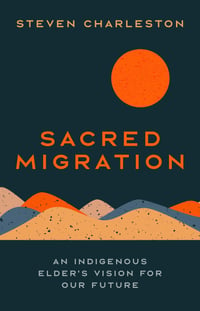
Two million years ago, our earliest ancestors undertook the first migration. Now, in a time of upheaval and chaos and dread, we must move again. In these pages, beloved author Steven Charleston draws on Native spirituality to show us the way. With his trademark mix of gentle warmth and piercing vision, Charleston offers the story of another kind of migration, one that arises from the deepest parts of ancient human culture. He reveals holy places, like kivas and mounds and the medicine wheel, and points us toward the hope that will orient us. And he shows us how to create an altar to sustain us. This journey is life-giving and restorative, and it's one we take together.
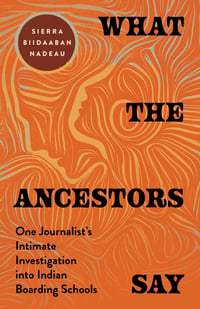
Reporting for her local newspaper, Odawa Anishinaabe journalist Sierra Biidaaban Nadeau stumbles onto a family's—and a nation's—buried stories. In enrollment records of Michigan boarding schools, she discovers that ten of her ancestors were forced to attend Indian boarding schools. What the Ancestors Say is a personal and communal odyssey through ancestral legacies, intergenerational trauma, and Native resistance and resilience that calls us to attend to the truths of the past. In a powerful act of reclamation, Nadeau brings forward stories of people the government tried—and failed—to break.
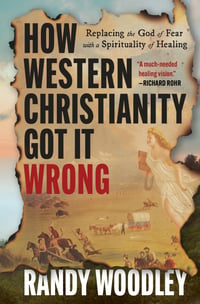
How Western Christianity Got It Wrong
Jesus never intended to start a religion that would justify stealing land, enslaving people, or destroying creation. So how did we get here? In How Western Christianity Got It Wrong, acclaimed author Randy Woodley, of mixed white and Native American heritage, traces how a brown man from Nazareth who never lost his connection to the whole community of creation became the poster child for empire-building and environmental destruction. Drawing on Indigenous wisdom, uncover what Jesus's liberating message looks like when freed from imperial frameworks.

Native America knows something about cultivating resilience and resisting darkness. Choctaw elder Steven Charleston offers words of hard-won hope, rooted in daily conversations with the Spirit and steeped in Indigenous wisdom. For all who yearn for hope, Ladder to the Light is a book of comfort, truth, and challenge in a time of anguish and fear. Night will not last forever. Together we can climb toward the light.

When the Spirit speaks to him in his daily prayers, Choctaw elder and spiritual explorer Steven Charleston takes a pen and writes down the messages. This stunning collection of more than two hundred meditations introduces us to the Spirit Wheel and the four directions that ground Native spirituality: tradition, kinship, vision, and balance. We are all searching for belonging and a vision of the world that makes sense. Together we can turn toward the wisdom of our ancestors, kinship with all of Mother Earth's creatures, the vision of the Spirit, and mindful balance of life.
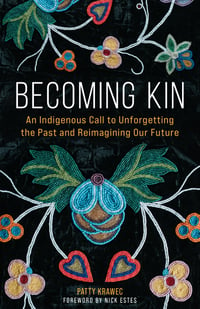
We find our way forward by going back. Patty Krawec, Anishinaabe and Ukrainian writer from Lac Seul First Nation, weaves her own story with the story of her ancestors and with the broader themes of creation, replacement, and disappearance. This remarkable sojourn through Native and settler history, myth, identity, and spirituality helps us retrace our steps and pick up what was lost along the way: chances to honor rather than violate treaties, to see the land as a relative rather than a resource, and to unravel the history we have been taught. This beloved book is now available in paperback!
Dive deeper with the Becoming Kin Discussion Guide—perfect for book clubs, church groups, or individual study.
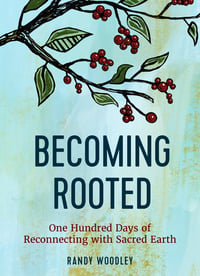
What does it mean to become rooted in the land? Randy Woodley, an activist, author, scholar, and Cherokee descendant, recognized by the Keetoowah Band, guides us on a one-hundred-day journey to reconnect with the Earth. In Becoming Rooted, he invites us to come away from the American dream—otherwise known as an Indigenous nightmare—and get in touch with the water, land, plants, and creatures around us, with the people who lived on that land for thousands of years prior to Europeans' arrival, and with ourselves. In walking toward the harmony way, we honor balance, wholeness, and connection.

When a friend asked what books could help them understand Indigenous lives, Patty Krawec, author of Becoming Kin, gave them a list. In Bad Indians Book Club, we examine these works written from the perspective of "Bad Indians"—marginalized writers whose refusal to comply with dominant narratives opens up new worlds. Interlacing chapters with short stories about Deer Woman, who is on her own journey to decide who she is, Krawec leads us into a place of wisdom and medicine where the stories of marginalized writers help us imagine other ways of seeing the world.
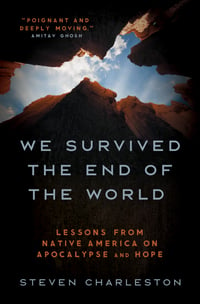
We Survived the End of the World
Native America has confronted apocalypse for more than four hundred years. In We Survived the End of the World, Choctaw elder and Episcopal priest Steven Charleston tells the stories of four Indigenous prophets who helped their people learn strategies for surviving catastrophe, using their lessons and wisdom as guidance for how we can face the uncertainty of the modern age.
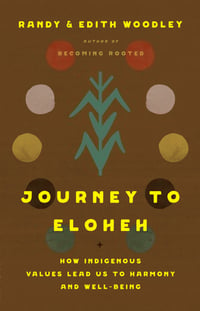
The pursuit of happiness, as defined by settlers and enshrined in the American Dream, has brought us to the brink: emotionally, spiritually, socially, and as a species. But Indigenous people carry forward the values that humans need to survive and thrive. Rooted in ten Indigenous values, Journey to Eloheh helps us learn lifeways that lead to true wholeness, well-being, justice, and harmony.
Also coming soon from Steven Charleston!
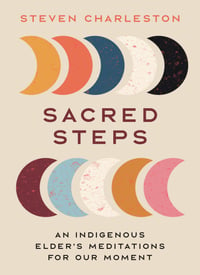
From Choctaw elder and retired Episcopal priest Steven Charleston, author of the beloved Ladder to the Light, Spirit Wheel, and other books, comes Sacred Steps, a collection of more than 175 original meditations on walking toward an unknown future with hope and courage. This book is a sacred, portable labyrinth—a testimony to the ancestral migrations that took human beings into new places and times. In these pages, Charleston offers hopeful meditations on the theme of journeying for spiritual seekers. Drawn from Native American spiritual tradition but testifying to the universal human experience, these messages lead us toward a future of more love, more justice, and more hope than we see now.
Sacred Steps can be read alone or alongside Charleston's Sacred Migration.
To view all of our books and resources, visit broadleafbooks.com.