
Keeping kids busy can feel like a full-time job, especially over summer break. But what if you could use this time to try a new way of fostering your kids’ play by doing less? That’s right: less.
You can actually help your kids play longer with more developmental benefits (and maaaaaybe finish your cup of coffee while it’s still warm) by creating an environment for play and then “getting out of the way.” Sound too good to be true? Below are 15 easy ways to get (and keep) your kids playing.
Invite them to play in a new way. Create an “invitation to play” by setting up some toys in a brand-new way. Try making an “invitation to crash” using precariously stacked wood or magnet blocks. Or an “invitation to wash” using dirty plastic animals, sponges, and soapy water. How about an “invitation to paint” using outdoor ride-on cars, washable paint (mix in a little dish soap to make it extra washable), and paintbrushes? You could let the painted cars dry, then create an "invitation to a car wash” with the painted cars, sponges, and a bucket of soapy water.
Go somewhere new. Whether it's a new park or a bigger change, play thrives on novelty. If you can find new places to play or rearrange a space in your home, this can spark play in new ways. This might also mean bringing out play items that haven’t been used in a while or using old favorites in a different way.
Check out play items from the library. Speaking of novelty, you can find new-to-you play items available for check-out at many libraries! Exchanging toys or other play items with friends, family, and neighbors can also be a way to incorporate novelty without breaking the bank.
Invite friends. The key ingredient to getting kids to play? Other kids! While siblings can be great playmates, inviting friends or cousins to play can inject new life into your kids’ play routine. If you don’t feel like hosting, inviting friends on an outing at the park or pool can mean your kids play more deeply, for longer, and more independently.
Foster independence. Consider how you can let kids lead their own play (while still ensuring safety). Instead of organizing a game, can you let your kids decide how to play while you enforce safety boundaries? Getting out of the way of their play allows deep, true play to take root.
Build a sensory bin. Sensory bins don't have to be fancy to be effective. Use our simple formula: “container + filler + tools = sensory bin fun!” Start by choosing a large container to hold the contents. For filler, consider pantry items, like rice or beans, or sensory sand. For tools, you can pull items from the kitchen such as ladles, spoons, or anything you have handy! (Note: Be mindful of choking hazards if your child puts materials in their mouth.)
Try process art. Play around with art materials such as paint, chalk, collage, or dot stamps. Or “paint” the sidewalk with a bucket of water and a paintbrush. With process art, don’t worry about the end result. Instead think about the skills, confidence, and joy the process brings to your kid (and the amount of quiet time you get!).
Make a laser maze. Hang yarn between two walls to create a "laser maze," put on some music, and let kids navigate the maze! They may also rearrange the maze or find other imaginative ways to extend the play.
Have a dance party! Did we say music? Letting kids pick the songs and have a dance party is a great way to connect and destress.
Try a spill station. If weather allows, setting up a station for water play outdoors can lead to sustained play. Provide tools for scooping, pouring, and mixing. (Always supervise children near water and choose a surface that will not become slippery when wet; grass is ideal.)
Take messy play to the bathtub. Let the kids fingerpaint with shaving cream in an empty bathtub. Easy cleanup makes messy play feel a lot less stressful, and kids thrive on a new location for play!
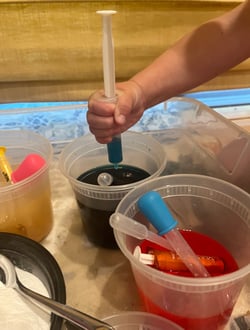
Dabble in potions play. Put out some baking soda and vinegar (add food coloring if you want!) for an easy and enticing invitation to play. Plastic pipettes add a fun element of play and help kids work on developing the fine motor skills they’ll need to write letters.
Go on a hike. Or half of a hike. Or even a brief walk on a local trail. Stop to check out bugs and draw in the dirt. (Always stay on marked trails and be mindful of safety; you know what’s right for your family.)
Pull out the pots and pans. Whether stacking, rearranging, or using them as drums, pots and pans are a great play item. What other everyday items could pull double-duty for play?
Do a cardboard creation challenge. Have lots of boxes lying around the house? Repurpose them by challenging your kids to build something of their choosing—a castle, a theme park, a wheelbarrow. The options are infinite! For optimal fun, make this a multi-day process where kids can create a large-scale build. Consider what tools and materials they might need to bring their vision to life.
What’s the connection between all these suggestions? In each, the parent or caregiver provides an environment or invitation for play (while ensuring safety) and then “gets out of the way of play!” That means letting kids discover their own favorite ways to play as they take the lead to discover new things and achieve their own goals. The other secrets to deep and sustained play? Incorporating novelty (new places, new play materials, or other kids) and valuing the process of play over any end “result.”
We hope these tips invite more deep, independent play into your kids’ lives—and we hope everyone has more fun!

Want more tips and tricks to foster your kids’ play? Learn more in Go Play: How Parents Can Empower Kids to Build Their Own Worlds.