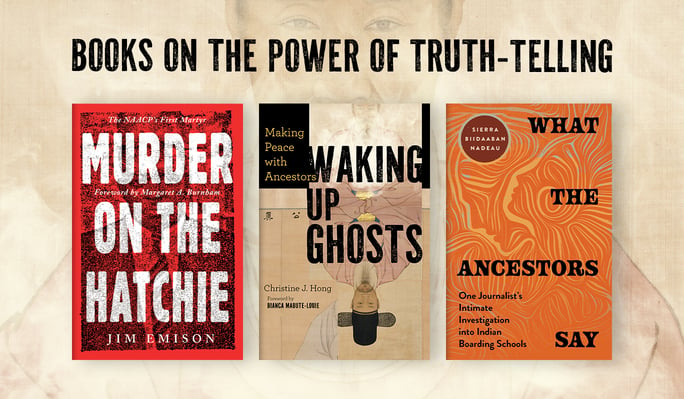
Stories hold power, and telling them can be life-changing. Through storytelling we can connect with others and build relationships, fight for justice and tell important truths, and heal our inner wounds and traumas. It also reminds us that we aren't alone as we journey through life. Below are books that share personal and communal stories and and tell truths that need to be told.
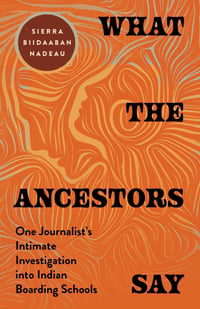
Reporting for her local newspaper, Odawa Anishinaabe journalist Sierra Biidaaban Nadeau stumbles onto a family's—and a nation's—buried stories. In enrollment records of Michigan boarding schools, she discovers that ten of her ancestors were forced to attend Indian boarding schools. What the Ancestors Say is a personal and communal odyssey through ancestral legacies, intergenerational trauma, and Native resistance and resilience that calls us to attend to the truths of the past. In a powerful act of reclamation, Nadeau brings forward stories of people the government tried—and failed—to break.
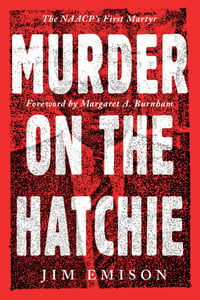
Murder on the Hatchie uncovers one of the earliest and most consequential crimes in America's long struggle for Black voting rights: the 1940 lynching of Elbert Williams in Brownsville, Tennessee. A founding member of the local NAACP, Williams was murdered for attempting to register Black voters, decades before the more famous murders of Emmett Till and Medgar Evers. Through rigorous research and gripping narrative, retired trial attorney Jim Emison reconstructs the events surrounding Williams's lynching and the federal government's failure to prosecute his killers. Drawing on FBI files, Department of Justice correspondence, and eyewitness accounts, Emison reconstructs how white officials conspired to silence a community, implicating local law enforcement, federal agents, and even national NAACP leadership.
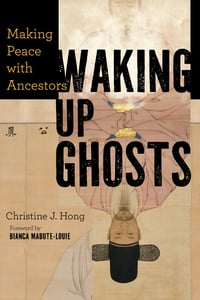
Since childhood, Presbyterian minister Dr. Christine J. Hong has experienced ancestral hauntings: voices, presences, and memories that carry both sorrow and care. But after the birth of her daughter and the death of her last maternal grandparent, the spirits came with a question: "Do you want to know where this pain goes—the pain you and I are holding?" What followed was a journey into Korean indigenous beliefs and practices that her family, like many diasporic Koreans, abandoned in favor of Christianity. Waking Up Ghosts invites us to reimagine ancestral practice, confront the ruptures of displacement and conversion, and shift into a spirituality that makes room for grief and liberation.
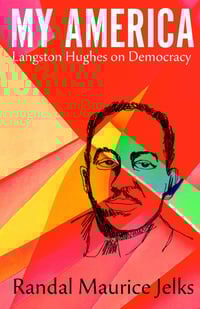
Best known as the leader of the Harlem Renaissance, the celebrated poet and writer Langston Hughes believed in the power of art as resistance. What can we learn from his works today? Langston Hughes is one of the few American writers who consistently wrote about democracy from a joyous perspective, and My America explores how his works speak to the political anxieties and crises we face today.
The hand of ancestors in our affairs is undeniable. They exist all around us, motivating individuals and cultures. And yet, the United States is a nation that does not often use the word ancestor. But ancestors are as active here as they are in cultures that center ancestral presence—maybe more so. In Ancestors, William H. Lamar IV examines family ancestors, political leaders, and voices of Scripture, and draws from African and African American historical ancestors to show how they shape our identities and moral compasses.
Between the Listening and the Telling
Stories tether us to what matters most: our families, our friends, our hearts, our planet, the wondrous mystery of life itself. Yet the stories we've been telling ourselves as a civilization are killing us: Fear is wisdom. Vanity is virtuous. Violence is peace. In the pages of Between the Listening and the Telling, storyteller, author, and activist Mark Yaconelli leads readers into an enchanting meditation on the power of storytelling in our individual and collective lives.
As the first Black woman to anchor the Boston-area evening news, Liz Walker found herself in an industry that defined her neighborhood largely by violence. But when she became a pastor there, she grew close to households marked not only by trauma but by courage. In moments of loss and pain, her congregation gathered to create soft spaces for others' grief to land. There, in the stories told, the meals shared, the tears shed, and the silences kept, people found a space to receive their sorrow. Out of this ministry grew a grassroots trauma-healing program, one now being replicated across the country. No One Left Alone is an extraordinary account of a Black church that decided to give neighbors a space to share their grief and provides a blueprint premised on a simple truth: the wounded heal best together.
Shop Now
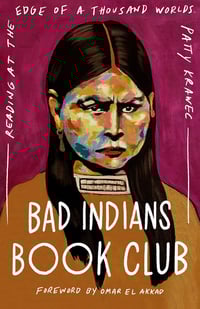
When a friend asked what books could help them understand Indigenous lives, Patty Krawec, author of Becoming Kin, gave them a list. In Bad Indians Book Club, we examine these works written from the perspective of "Bad Indians"—marginalized writers whose refusal to comply with dominant narratives opens up new worlds. Interlacing chapters with short stories about Deer Woman, who is on her own journey to decide who she is, Krawec leads us into a place of wisdom and medicine where the stories of marginalized writers help us imagine other ways of seeing the world.
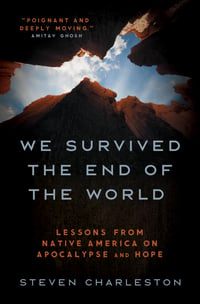
We Survived the End of the World
Native America has confronted apocalypse for more than four hundred years. In We Survived the End of the World, Choctaw elder and Episcopal priest Steven Charleston tells the stories of four Indigenous prophets who helped their people learn strategies for surviving catastrophe, using their lessons and wisdom as guidance for how we can face the uncertainty of the modern age.
To view all of our books and resources, visit broadleafbooks.com.