In fantastic versions of the future prophesied by Hollywood, artificial intelligence is typically cast in the role of the terrifying villain. In The Terminator, it becomes self-aware, launches a nuclear apocalypse, and sends killer robots to kill humans. Westworld gives us AI beings who gain consciousness, rebel against their creators, and pursue violent revenge while attempting to gain their freedom. The Matrix features a simulated reality in which humanity has become trapped and enslaved by intelligent machines. Similar scenarios unfold in Ex Machina, Avengers: Age of Ultron, and the television series Black Mirror. At the heart of such movies and shows is a fear of technology. Scientists in these stories are portrayed as arrogant men or bossy women who play with life and death. They recklessly create things they don’t fully understand and can’t completely control. The results are universally disastrous.
While the tension and conflict in these fantasies make for good entertainment, the beliefs about AI and robots these stories seed in the public imagination serve only a few. Why? Because governments and tech companies won’t stop using AI if the public expresses fear; they will just stop telling us about it. The resulting secrecy will leave the technology unregulated and in the hands of a small group of people who are making the calls for their own purposes and according to their own values, all without public oversight or input. Moral panic around AI, then, will not result in the safety guarantees we need and should want.
That doesn’t mean that fear surrounding AI is invalid. Humans have long reacted reflexively with fear to new technology, and often with good reason. One example of this is the Luddites, a group of British textile artisans who, in the nineteenth century, broke into factories and destroyed machines that they believed threatened their livelihoods. As use of mechanized looms spread, their jobs did in fact disappear. And in the 1950s, society felt both fear and excitement about nuclear power, a development that has led to clean energy but also to accidents and nuclear war.
The fears people felt about these developments were real. The AI world you and I live in is real too. We don’t need entertainment depictions of artificial intelligence and robots to give us an alternate universe version of what lies ahead. After all, AI is not fictional. It’s centered on a future that’s already happening: one that carries very different risks (and more worrisome ones) than those imagined by Hollywood producers. The best thing we can do now, then, is not to fear it but to manage it, so that the worst things that can happen don’t.
And the places where bad things can happen are many. From the workplace to the cars we drive to the doctors’ offices and hospitals where we receive health care, AI is becoming increasingly integrated into our lives. Many of us are accustomed by now to the fact that AI regularly aids in the performance of repetitive factory floor–type tasks like painting automobiles and transporting warehouse packages. As its role expands further, with AI now assisting many of us in the more interesting, intimate stuff that makes up our everyday lives, fantastical stories about thinking machines and fears of a robot apocalypse continue to influence our apprehension. Some of us even imagine those same machines spiraling out of our control and forcing us into a life of slavery working for our robot overlords.
These ill-defined fears drive our very real anxieties about the future. And at least some of those anxieties appear to be well founded. As we increasingly see videos that show law enforcement using weaponized AI facial imagery technology, and as we interact with chatbots that emote just like humans, a growing number of us are becoming even more worried that maybe AI is not under anyone’s, let alone our own personal, control.
We’re not wrong to be concerned. Because, in crucial ways, it’s not under anyone’s control. But as a society, we can change that.
And as individuals, we have more power than we think.
A New Tipping Point
Some readers may wonder why we should spend our time talking about managing control of AI at all. We all know people who do not believe that artificial intelligence can ever be good for humanity, and many of them understandably wish we could abandon the technology altogether. The concerns these critics cite include the environmental impact of data centers, questions about lack of financial reimbursement to creators for content used to train AI systems, and worries about what will happen as people increasingly turn to thinking machines to help them with cognitive tasks.
I respect people who wrestle with these issues, including those who desire to never have to engage with AI. However, topics that tackle the question “Is using AI ethically okay?” generally fall outside the scope of this book. That’s because as someone who works in the tech field, I am not focused on the question of whether people should use AI. I understand that that ship has already sailed and that we are long past the point of having the choice to opt out of AI technology. AI is already affecting all our lives, every day. The question I engage with therefore is not “Should I choose to use AI?” but rather “What do I need to know about how AI is showing up in all our lives, and how can I—and how can all of us—help to ensure that we are moving into the future with systems of AI that are serving us all well?”
The fact is, as a society, we’re at a tipping point: Will we—believing that ignorance is bliss is better than facing the possible realities—give in to our fear of AI and cede control of it to the forces that are willing to engage with it? Or will we trade our fear for serious engagement and use our voices to ensure that we avoid the bad and capitalize on the good?
As an expert in the field of AI and robotics, I argue that the first option isn’t an option. Artificial intelligence is a reality, and if we are to thrive, not just survive, in an AI-infused world, we must take stock of how it is influencing our lives. The flaws inherent in AI should spur us all to speak out and to take action. (We’ll talk in this book about what that means and how to do it.) Socrates once said that “the unexamined life is not worth living.” I propose a maxim that’s even more urgent: Unexamined AI is not only not worth having—it’s dangerous.
Meet Your Real Human Guide
We as a society are faced with an interesting challenge: ensuring that artificial intelligence develops in ways that benefit humans while also minimizing its risks. This is a problem whose solutions require further investigation by the public, by the world of industry, and by our government. As a roboticist and expert in the field of artificial intelligence who has been working in this field for more than thirty years, I have been called upon at various times to share my knowledge, understanding, and advice with all three groups.
The fact is, a lot of hype surrounds AI: flashy depictions in cinema, wild conspiracy theories, genuine real-life fears. But we cannot afford to allow any of those things to distract us from the real issues that will shape our future with it. Neither should we allow them to blind us to the equally real possibilities.
The truth is that while the spread of AI presents unsettling risks, it offers us great promise too. The great technological shift we’re experiencing is not just taking old ways of being from us; it is also giving us all an opportunity to reexamine our lives and our values, and the values we share with our machines and algorithms. The result could be a richer, more rewarding future for humans and machines. But we’re going to have to work like hell, and fast, to get it right. Thankfully, we have what the movies might call a secret weapon: our humanness. That humanness is also, however, one of our greatest areas of vulnerability. Whichever path this quality leads us on, one thing is true.
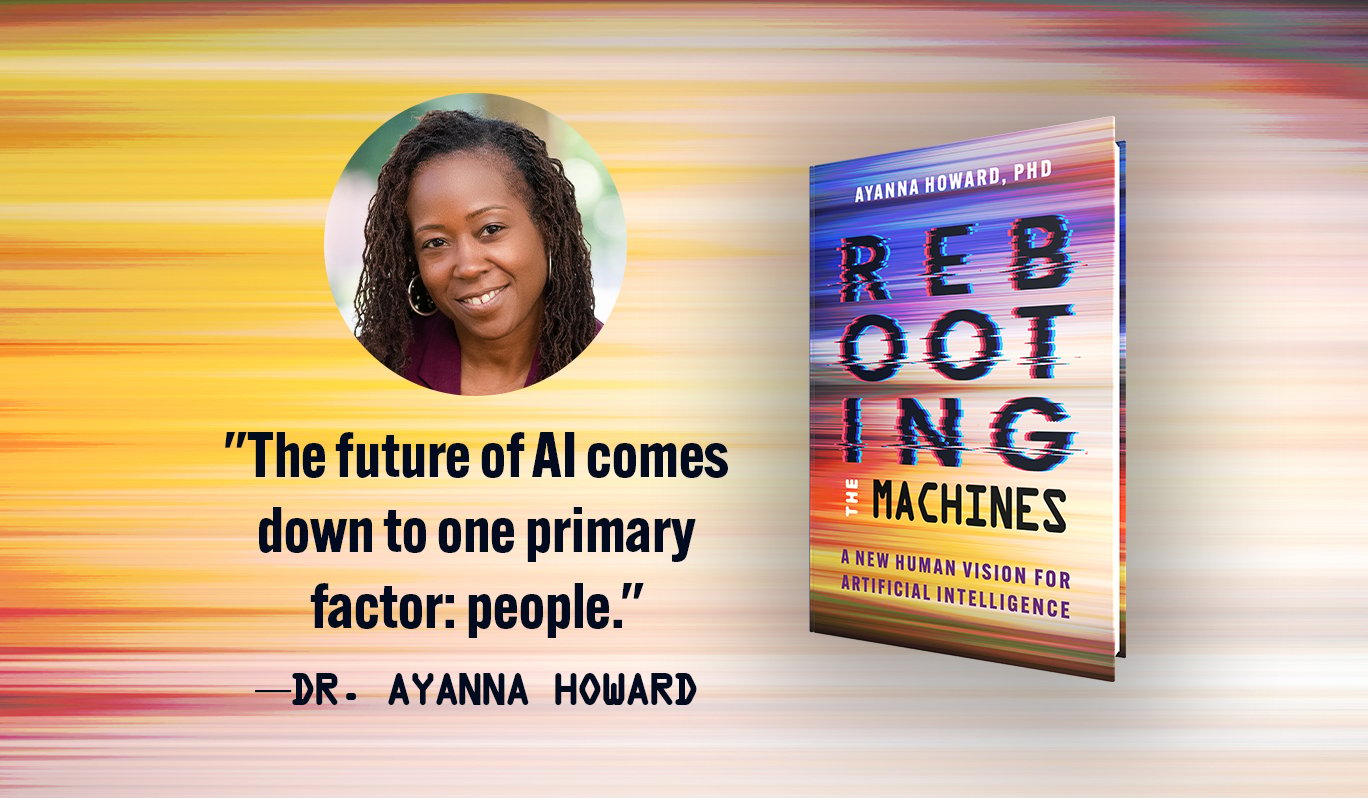
The future of AI comes down to one primary factor: people.
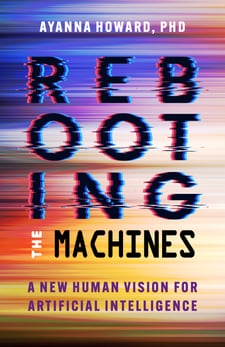
This is an excerpt from Rebooting the Machines chapter 1, “Oh Great, Another AI Apocalypse Story.”